

ZONA DEPORTIVA JESUS
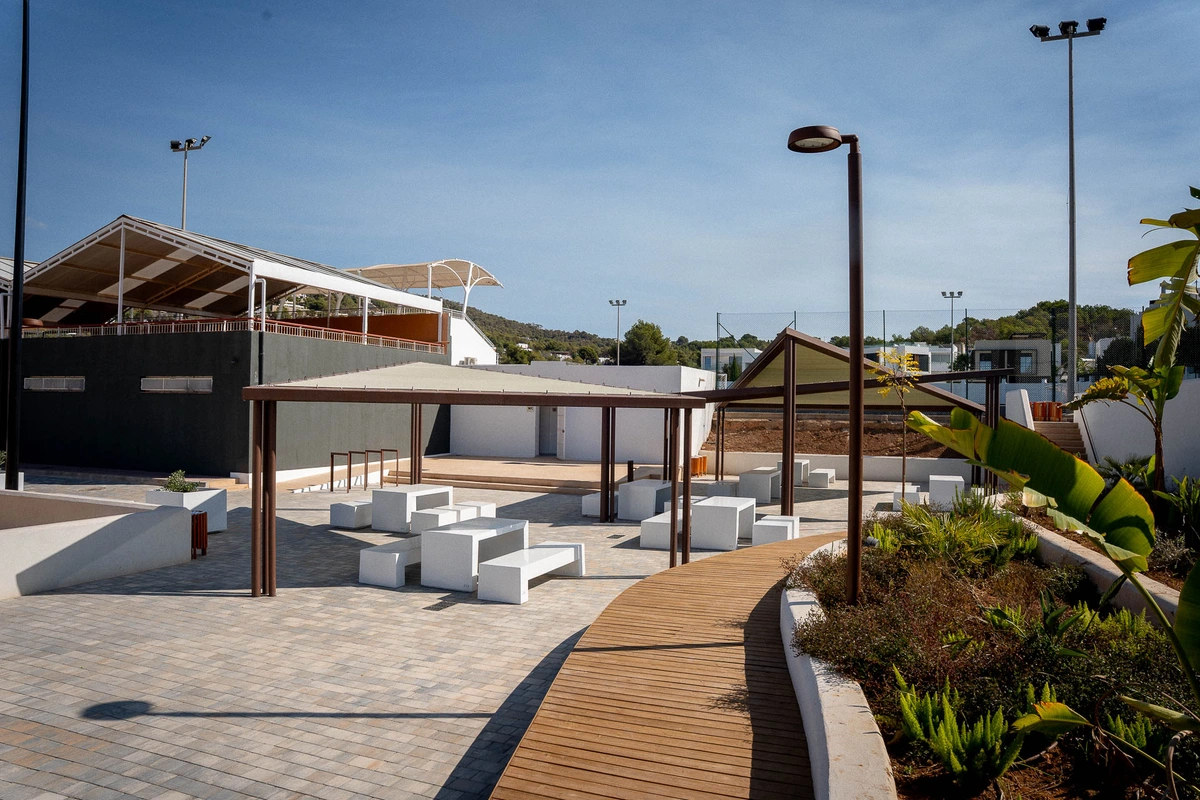
The landscape intervention in this public park has been designed to make the most of the site’s different levels by using a system of terraces that smooth out the natural slopes of the terrain.
NAME
ZONA DEPORTIVA JESUS
TYPE
Sports area
LOCATION
Jesús
STATE
Finished work
ARCHITECTS
Meridià Estudio
PROJECT MANAGEMENT
Miquel Cárceles Cardona
Manuel Sempere Polo
Arq Disseny Studio
PROJECT TEAM
Vicente Marí Marí
Jesús Palacios Sánchez
Adrián Sempere Valenciano
PHOTOGRAPHER
WeLoveMedia
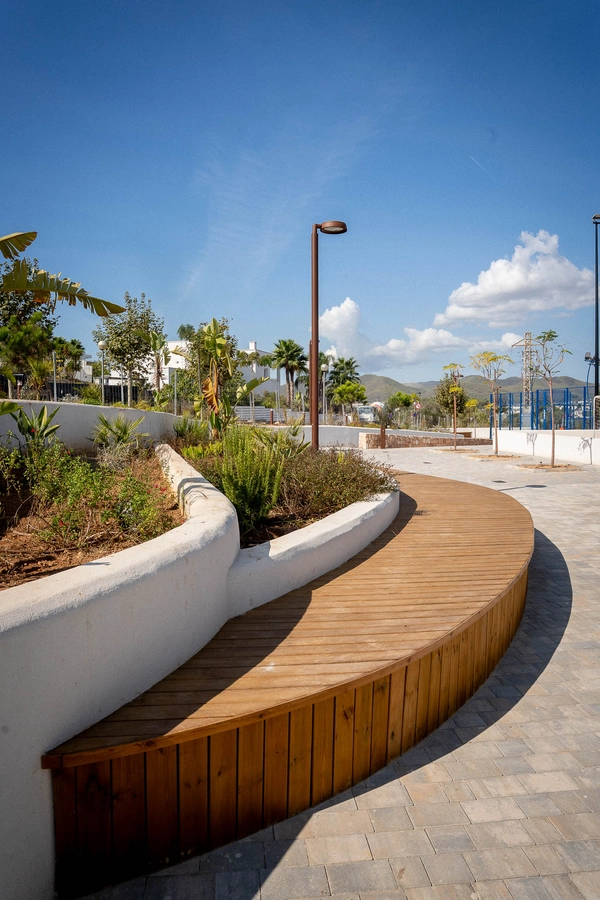
These terraces are seamlessly connected through the use of ramps, which facilitate access and movement between the various levels, ensuring that the park is accessible to everyone, including people with reduced mobility. The ramps are harmoniously integrated into the park’s curved landscape design, avoiding abrupt solutions and creating a comfortable and pleasant route.
In addition to the ramps, benches have been incorporated at strategic points along the terraces, providing resting areas where visitors can relax while enjoying the natural surroundings. These benches not only offer comfort but also help define resting and social spaces at different levels of the park, inviting users to enjoy the landscape and views.
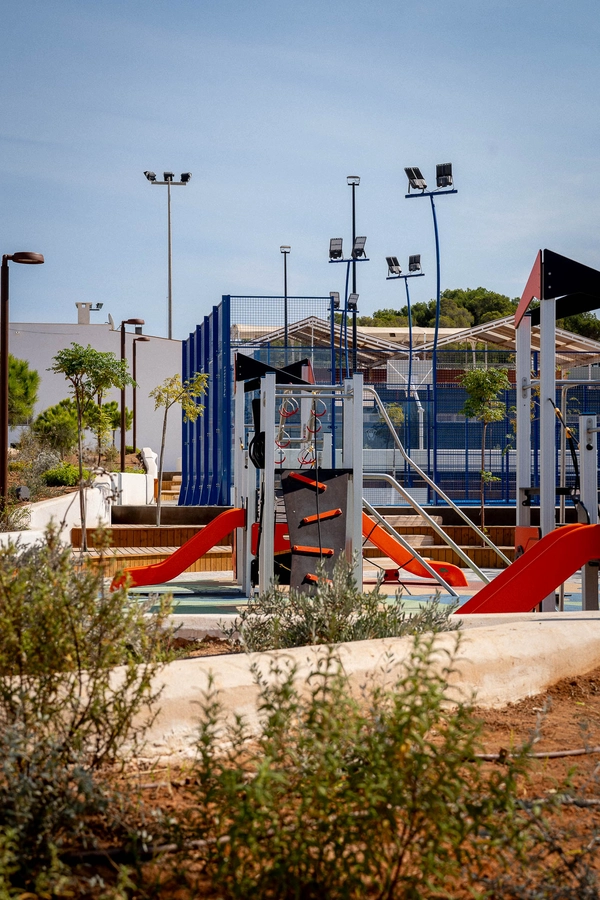
The design of the terraces and their connections has been carefully planned so that each area of the park links smoothly, without creating visual or physical barriers. The entire space is surrounded by lush vegetation that acts as a protective element, creating a sense of privacy and tranquility while framing the park’s functional areas. The vegetation also softens the transitions between levels, providing a natural barrier that perfectly integrates the terraces into the environment.
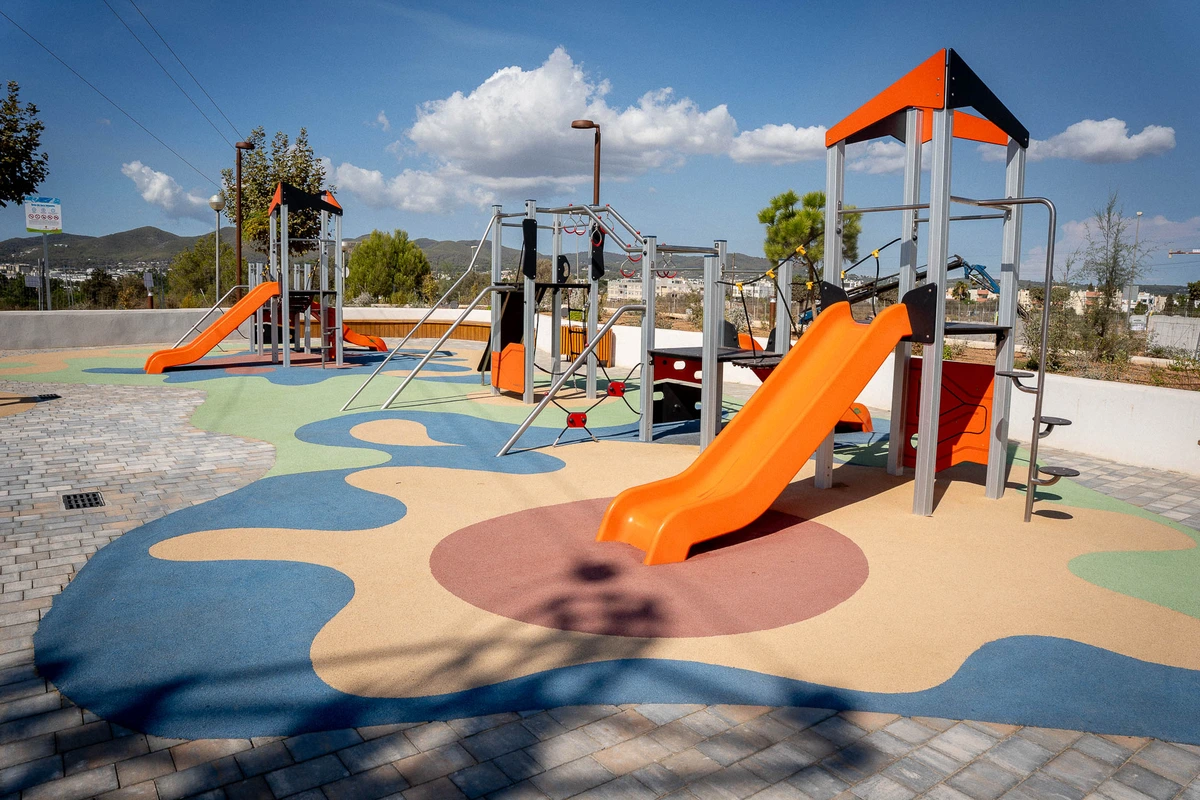
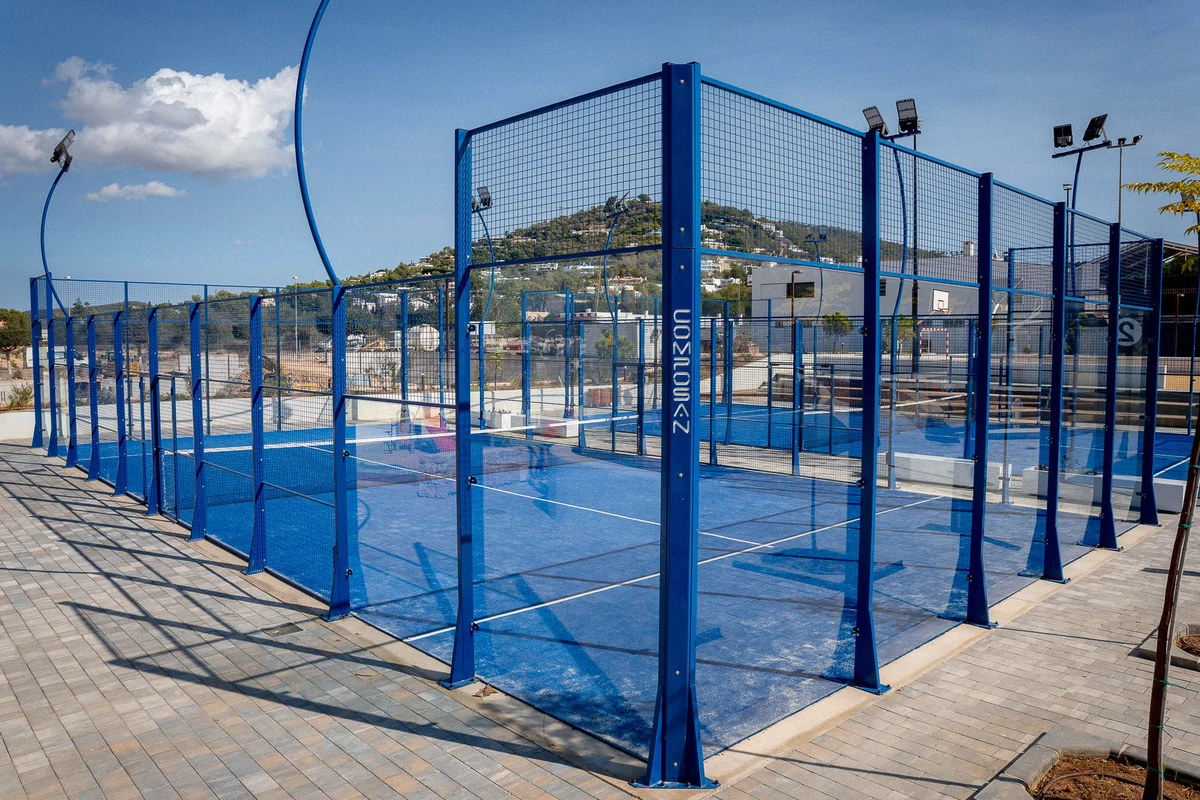
Each terrace accommodates part of the park’s functional program: a children’s play area, two paddle courts, and a multi-sport zone—all interconnected through this terraced design, ensuring comfortable circulation and a visually pleasant environment.
The landscape intervention not only addresses the challenges presented by the site’s topography through the use of terraces, ramps, and benches, but also creates an accessible, attractive, and sheltered public space that encourages recreation, sports, and social interaction in a livable urban setting.